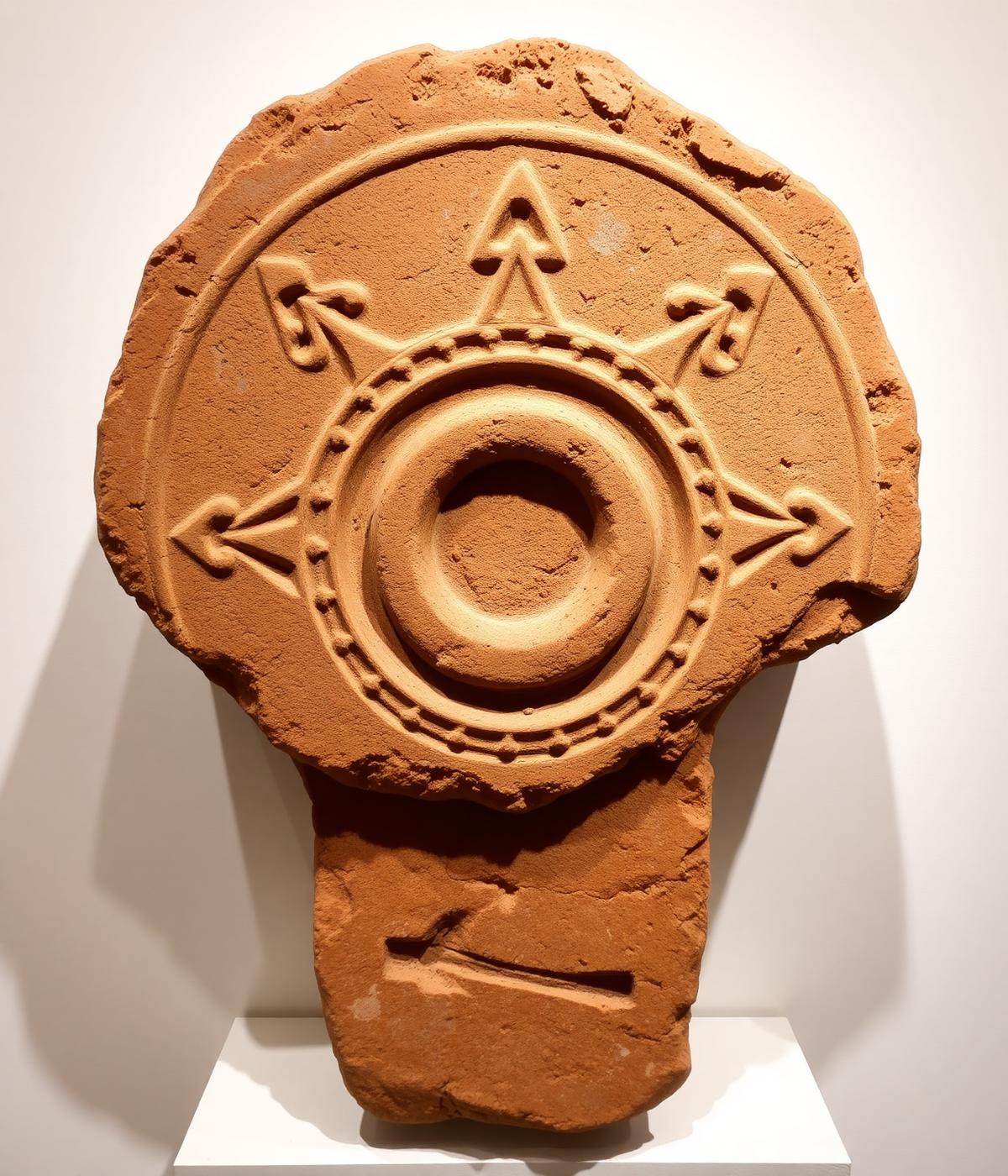
Fire
ՀուրThe visible presence of Mihr and Vahagn. Kept perpetually at Bagavan and Garni; leapt on Trndez night. Never extinguished with water, only left to sleep.
Hetanism was not a religion of books but of correspondences. What was above was mirrored below; what burned on the altar burned in the human breast.
The Armenians honoured four sacred substances — fire, water, earth, and air — and the two great lights of sun and moon that ordered them. Each element belonged to a divinity and each carried a moral weight. To pollute a spring or to spit into a fire was to strike at a god.
The three great feasts were not just holidays but the practical geometry of belief.
The dead did not vanish. They joined the hogik — the ancestral spirits — and passed to a realm that Armenian texts call Draxt or the "grove of the fathers," ruled in some traditions by Spandaramet and in others by Aramazd himself. Heroes who fell in battle might be recovered by the Aralezner and returned to the living; the wicked were bound to the roots of the mountains as vishaps.
Graves were marked with vishap-stelae, rams, and — in later centuries — with the winged sun-wheel arevakhach, a symbol so deeply Armenian that it survived the conversion and became the model for the Christian khachkar.