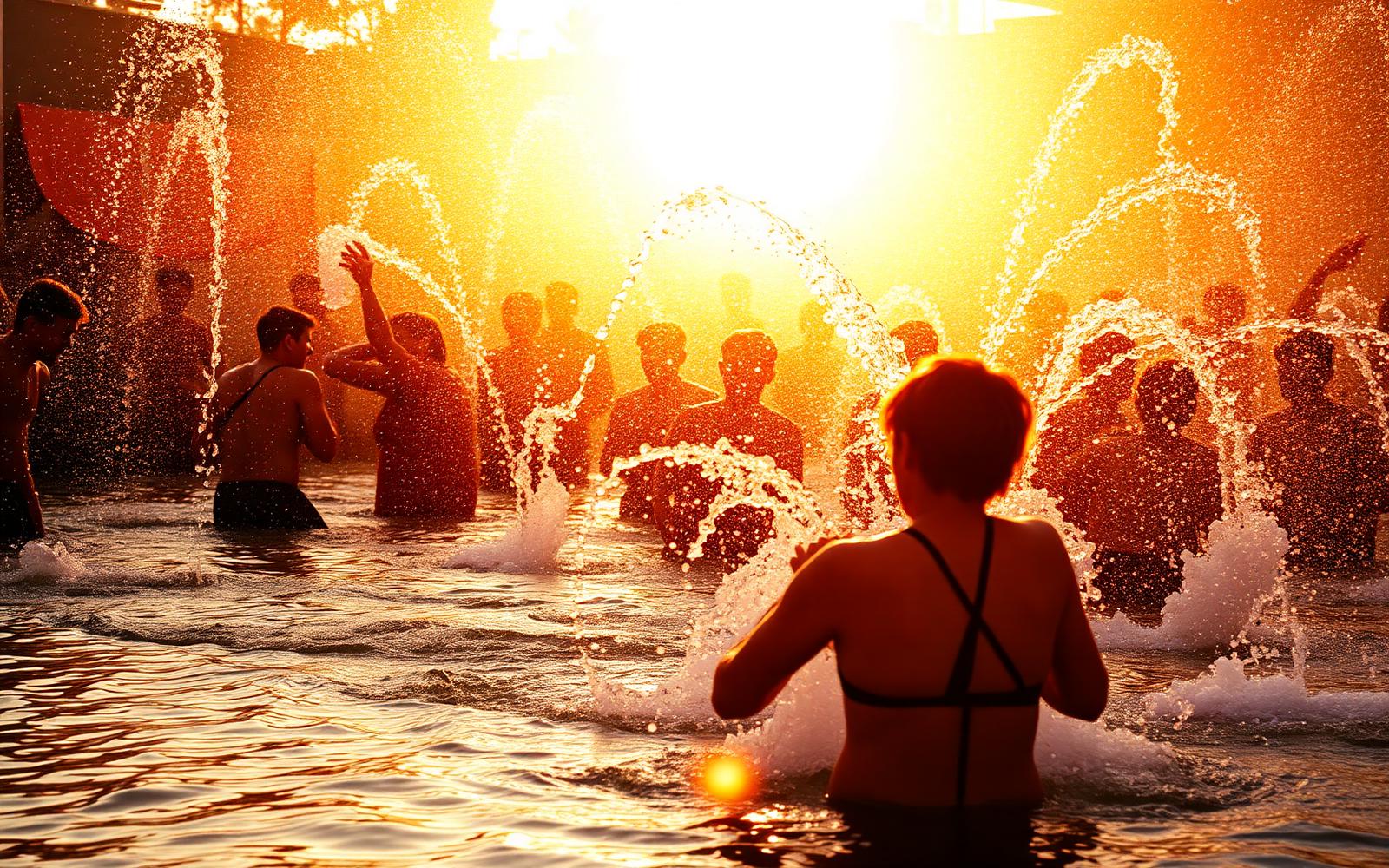
The Wheel of the Year
The Armenian sacred year followed sun and water. Priests kept fire at Garni and Bagavan; the people kept fire at the hearth; and four times a year the whole land turned as one.
How the Old Rites Were Kept
Worship centred on the bagin — an open altar of stone, usually raised on a height — where priests of the caste of k'urm offered wine, incense, bread, and the meat of sacrificial oxen and sheep. Great temples such as Erez, Bagavan, and Ashtishat kept perpetual sacred fires, tended by a hereditary priesthood. Kings crowned themselves at Bagavan; oaths were sworn on the fire, on the sun, and on the right hand of Anahit.
Pilgrimage was continual: to the golden statues of Anahit at Erez, to the shrine of Vahagn at Ashtishat, to the mountain of Nemrut for Barsamin, to the lakes of Van and Sevan for the water-dragons. Every spring, every grove, every peak was a shrine to someone.
Festivals
Open any feast for its fuller account and for guidance on keeping it today with respect rather than appropriation.