Ararat
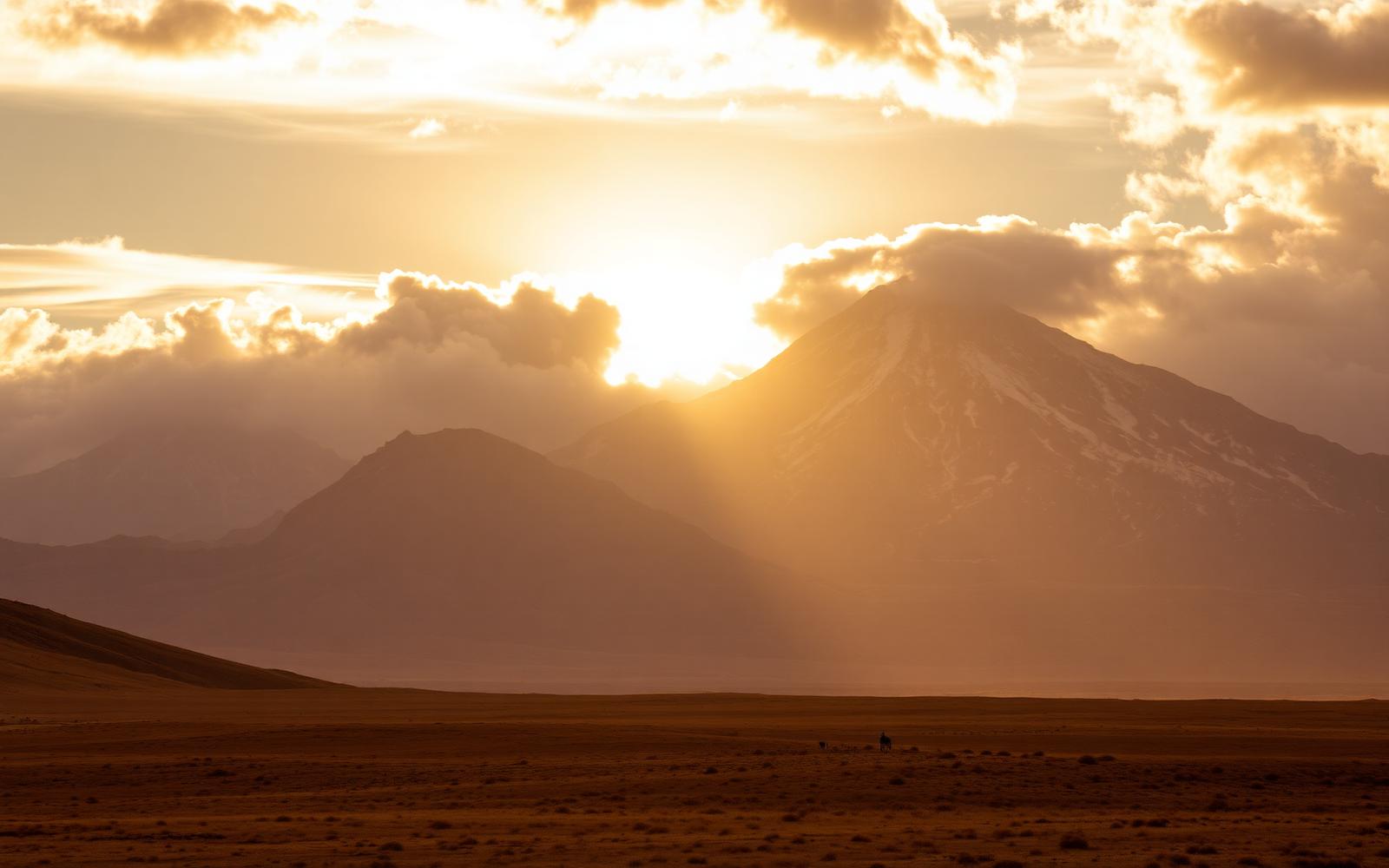
ՄասիսThe great twin-peaked mountain of Armenia — home to vishaps in the pagan imagination, resting-place of Noah's ark in the Christian one. Its silhouette is still the visual heart of the nation.
In Hetanism the land itself is holy. Mountains are ancestors, lakes are the sleeping-places of dragons, and the temples were only the finest of a thousand shrines. Much of what stands today, Christian or ruined, still remembers who came first.
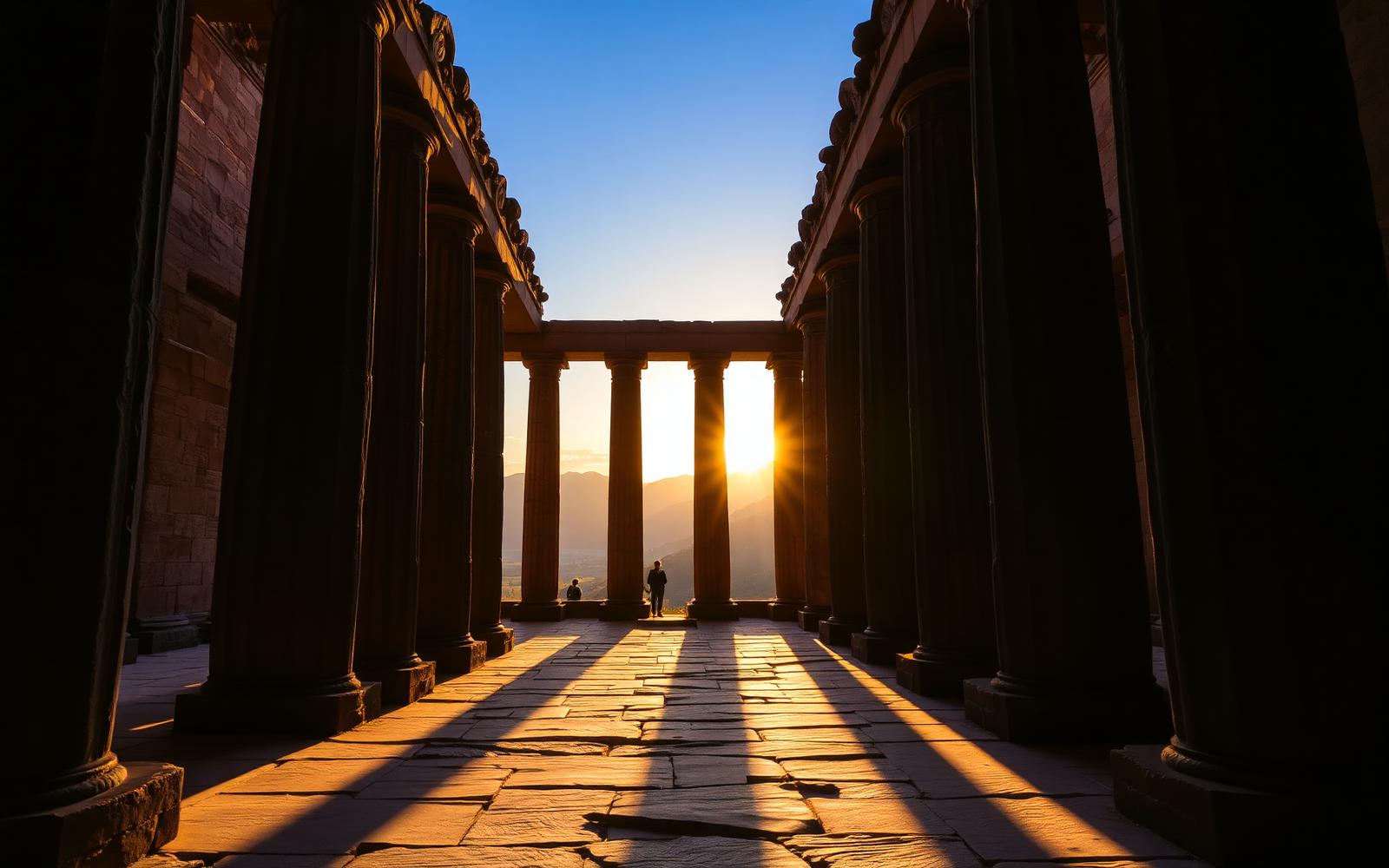
Perched above the Azat River gorge, the Temple of Garni is the only Greco-Roman peripteral temple in the former Soviet space, and the only surviving pagan sanctuary in Armenia. Built in the first century CE — traditionally by King Trdat I after his coronation in Rome — its twenty-four Ionic columns of grey basalt frame a small cella that once housed a statue of Mihr, god of the sun.
Where every other temple was pulled down after 301 CE, Garni was spared: the royal family kept it as a summer palace. It stood until 1679, when an earthquake felled it, and was raised again in the twentieth century from its own scattered stones — a resurrection in basalt.
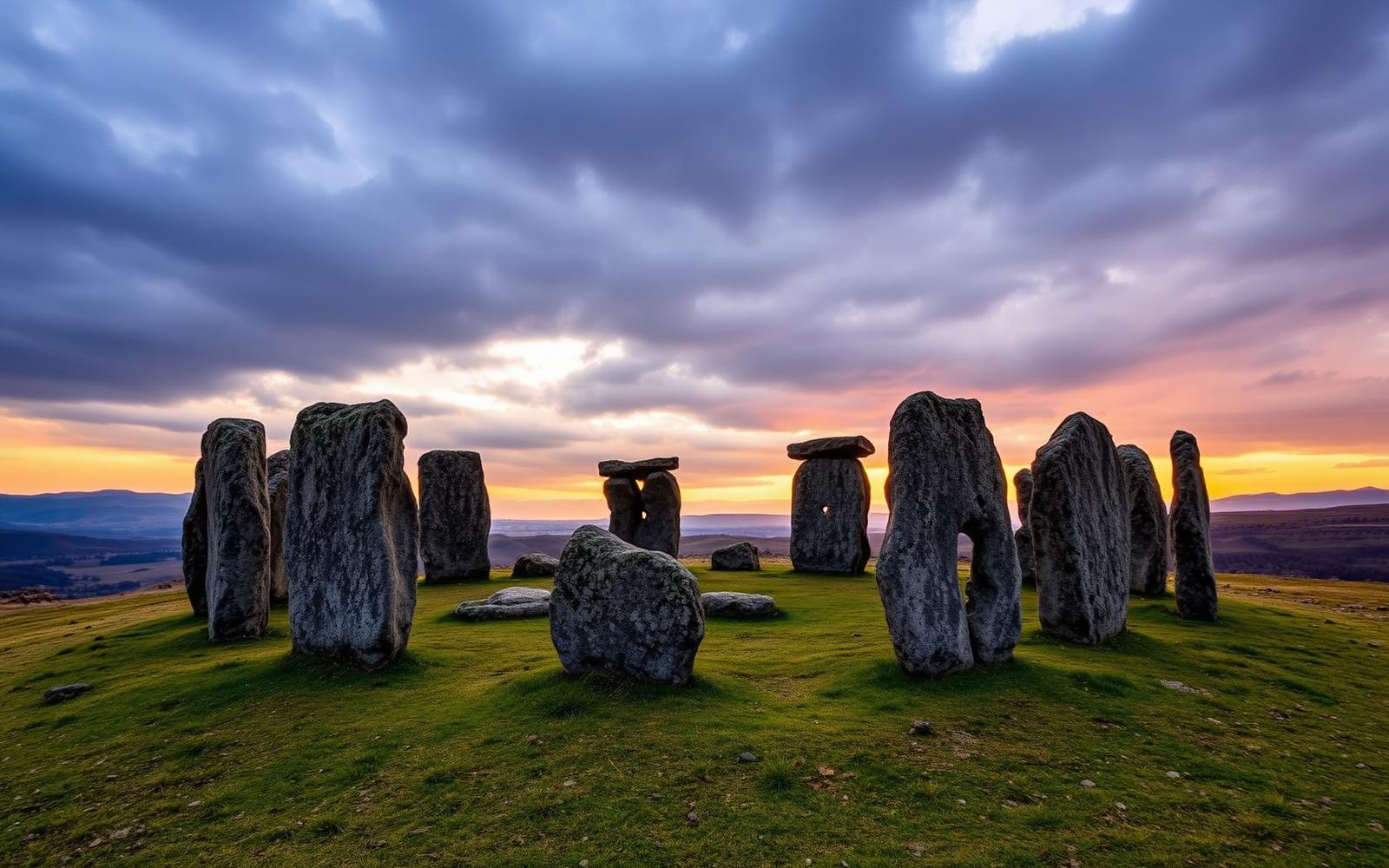
On a windswept plateau near Sisian, more than two hundred basalt megaliths stand in a loose ring nearly two kilometres across. Called Zorats Karer — "the army of stones" — and popularly Carahunge, "speaking stones," the site is at least five thousand years old, and eighty of its stones are pierced with smooth-bored holes.
Some archaeologists read Carahunge as a Bronze Age necropolis; others, as a Neolithic observatory whose holes sight the sun's solstices and the movements of the star Sirius. Whatever its function, it is older than any Armenian god now remembered — the deepest layer of the sacred land.
Armenian religion is vertical. The gods live on peaks, and the peaks themselves are close to being gods.
When Gregory the Illuminator baptised Armenia in 301 CE, he did not so much replace the old sanctuaries as adopt their addresses. Many of Armenia's oldest churches stand exactly on top of the pagan altars they superseded.