Three Rivers, One Faith
Armenian paganism was not born in one place. Three currents fed it — the mountain gods of Urartu, the fire and moral order of Iran, and the anthropomorphic form of Greece — and out of the confluence came the classical pantheon of Garni.
Urartian Origins
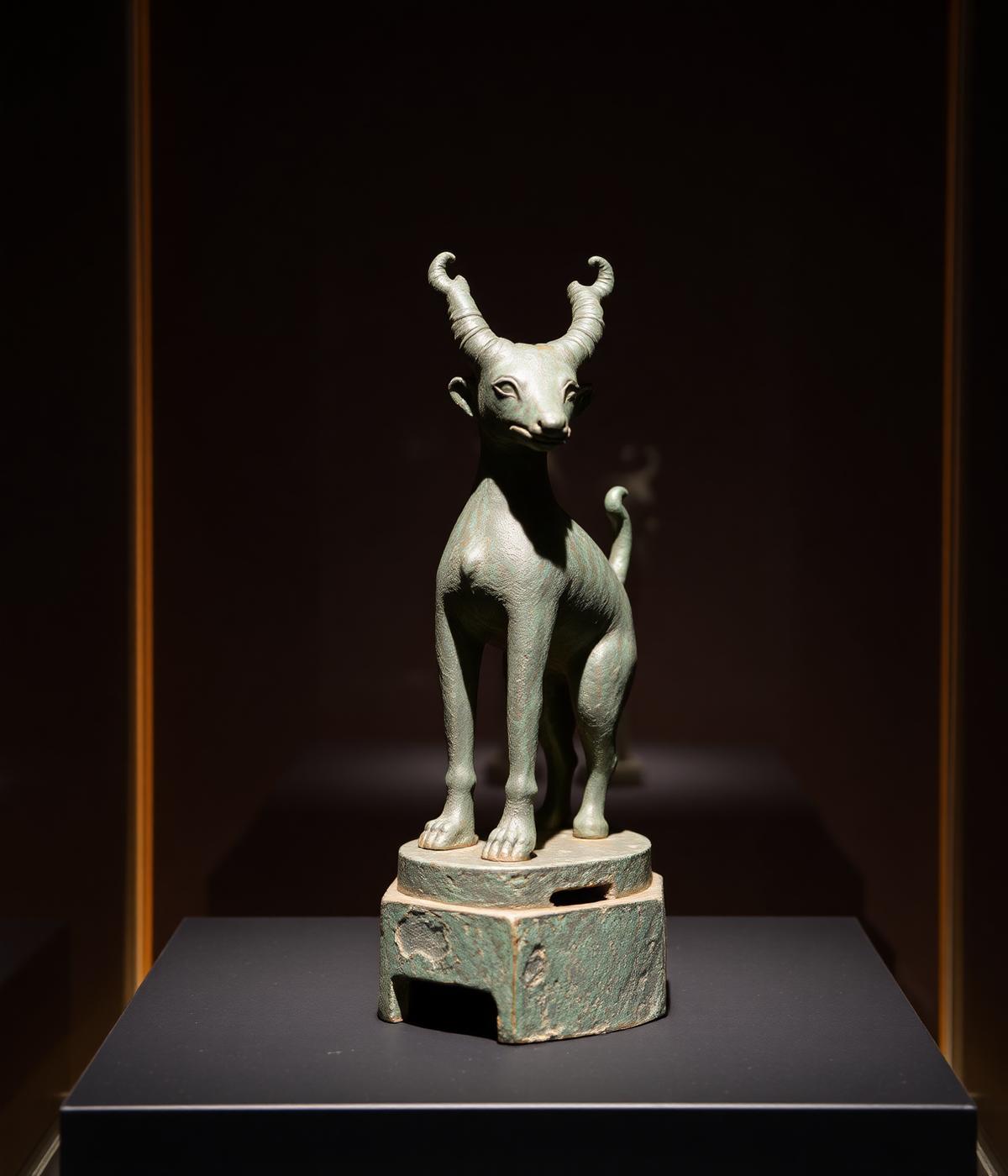
From roughly the ninth to the sixth centuries BCE, the kingdom of Urartu — centred on Lake Van and known to itself as Biainili — ruled the Armenian highlands. Its state religion, recorded in the great cuneiform inscription of Meher-Kapisi, listed a pantheon of seventy-nine gods.
The chief triad was Ḫaldi (war and kingship), Teisheba (storm), and Shivini (sun). Cattle, horses, and grain were sacrificed at rock-cut niches called susi. When Urartu fell to the Medes and the Armenians rose in its place, the gods were re-named but not, in truth, replaced — Shivini's sun-wheel became Mihr's, Ḫaldi's fortresses became Vahagn's shrines, and the vishap-stelae of the Urartian water-cults kept their guard by the springs.
Persian Influence
After the Achaemenid conquest of the sixth century BCE, and again under the Parthians, Armenia stood inside the Iranian cultural world. Persian yazatas entered the pantheon and took Armenian names:
- Ahura Mazda → Aramazd, father of the gods.
- Anahita → Anahit, the mother.
- Mithra → Mihr, god of the sun and covenant.
- Verethragna → Vahagn, the dragon-slayer.
- Tishtrya → Tir, scribe of the gods.
- Spenta Armaiti → Spandaramet, earth.
With the names came the moral architecture — the dualism of truth and lie, the sanctity of fire, the sacred priesthood. But Armenia never became Zoroastrian in the strict sense; it kept its ancestor-cult, its dragon-stones, and its taste for many gods.
Hellenistic Influence
The campaigns of Alexander and the long reach of the Seleucids opened Armenia to the Greek world. Under the Artaxiads and especially Tigranes the Great in the first century BCE, the gods were given faces: sculptors from Asia Minor were brought to cast statues of Anahit in gold, Aramazd in bronze, Vahagn in stone. Temples like Garni were built on Greco-Roman plans. The Armenian gods were identified with Olympians in bilingual inscriptions — Aramazd with Zeus, Anahit with Artemis, Vahagn with Herakles, Mihr with Helios, Tir with Apollo.
It is this final, syncretic form — mountain memory dressed in Iranian fire and Greek marble — that the historians Movses Khorenatsi and Agathangelos would eventually describe.